
China’s Toy Industry Faces Deep Crisis as Orders Fall and Factories Shut Down
China’s toy industry is facing a severe crisis as Middle East conflict, rising shipping costs, expensive raw materials and weak domestic confidence push factories toward closure and workers into uncertainty.
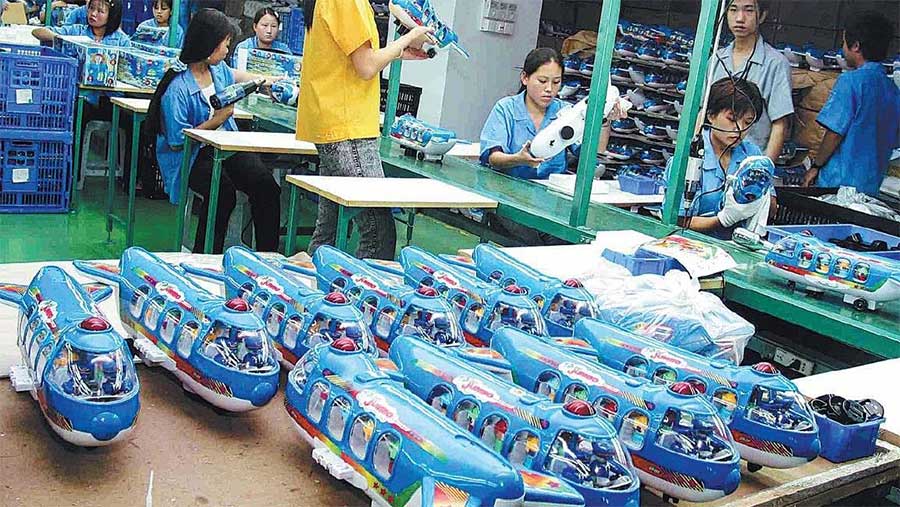
China’s toy industry is facing one of its worst crises in decades, with orders reportedly falling by nearly 50 percent due to rising conflict in the Middle East, while raw material prices have tripled. On April 20, 2026, four major factories in Yulin, Guangxi, were shut down on the same day, suddenly leaving thousands of workers unemployed. The collapse of Washing Toys Group, a Hong Kong-funded company with nearly half a century of history, became a symbolic example of the crisis. At its peak, the company operated 40 production lines, produced 30,000 units daily, exported to more than 20 countries, and sent 85 percent of its orders to the United States. After the factories closed, many workers, including women, blocked roads demanding unpaid wages, while police were deployed to control the unrest. The crisis has been linked to US-China tariff tensions, delayed payments from foreign clients, higher plastic prices caused by rising oil prices, and dangerous shipping routes through the Red Sea and the Strait of Hormuz. Container costs from Shanghai to the Middle East have reportedly increased from 3,000–4,000 US dollars to more than 10,000 US dollars, while many shipments remain stuck at sea.
The crisis is not limited to Yulin. Since 2025, major toy companies such as Kenwa Toys, Shenli Toys, Double Toys and Everwind Toys have also closed, with Everwind alone said to have employed 300,000 workers before bankruptcy. Although official data claims Jiangsu’s export value rose 6.8 percent in the first quarter of 2026 to more than 1 trillion yuan, factories on the ground are facing falling orders, rising costs and severe cash-flow pressure. Private fixed-asset investment has declined, while capital outflow and relocation toward Southeast Asia are increasing as investors lose confidence in the domestic market. Workers are bearing the heaviest cost, with wages in industrial areas such as Hangzhou reportedly falling to 13–22 yuan per hour, below the official minimum level. Many migrant workers have been left vulnerable to unpaid wages, sudden closures and weak legal protection. The text argues that the toy industry’s decline reflects broader structural weaknesses in China’s low-margin export model, weak domestic demand, slow policy response and failure to protect private enterprise and workers.