World Elder Abuse Awareness Day Calls for Action Beyond Awareness
World Elder Abuse Awareness Day has highlighted the need for stronger policies, practical implementation and social responsibility to protect senior citizens from abuse, neglect and insecurity.
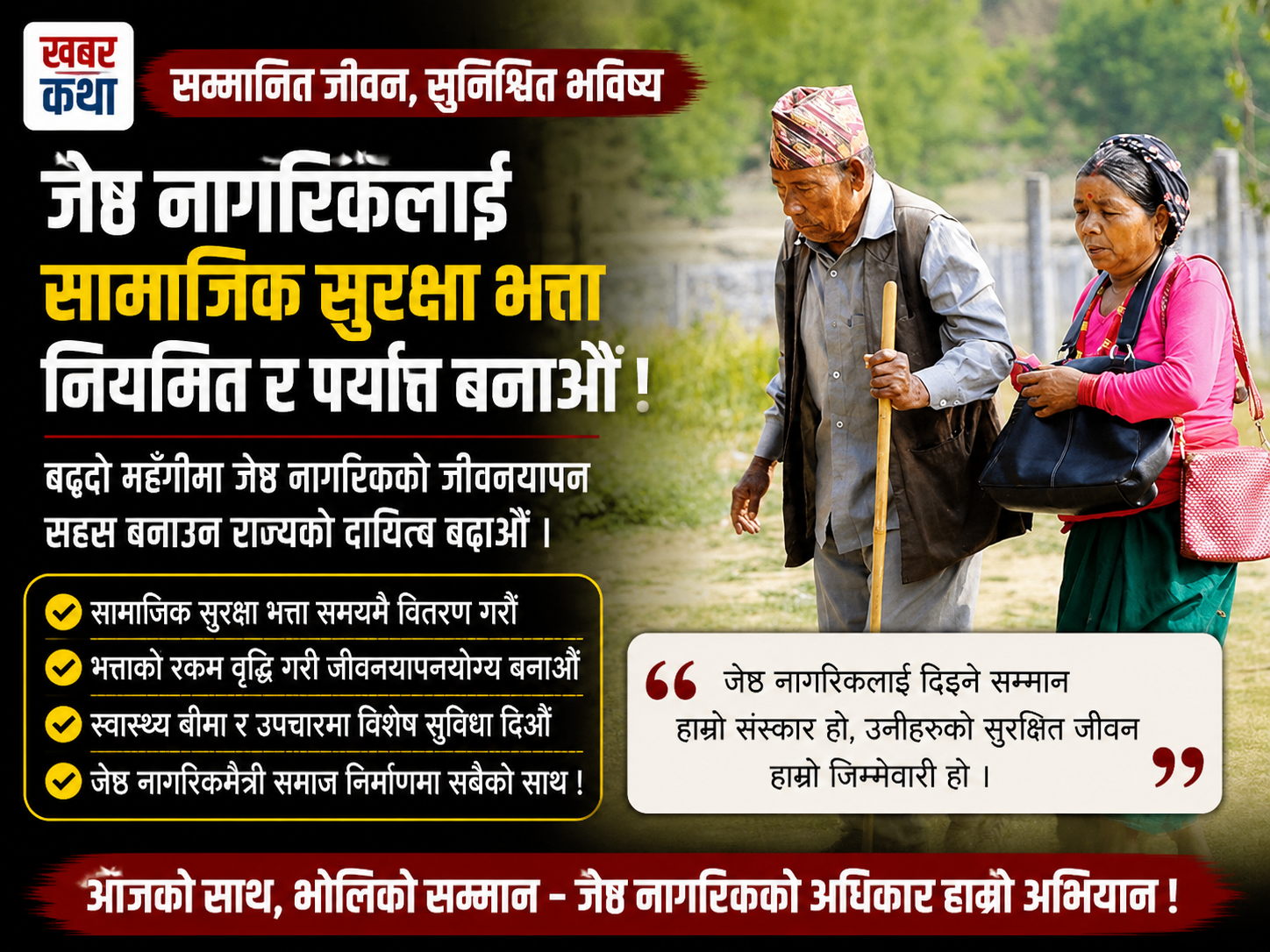
World Elder Abuse Awareness Day is marked every year on June 15, or Ashar 1 in Nepal, to raise awareness against the abuse and neglect of senior citizens. For 2026, the international slogan is “Beyond Awareness: Making Elder Abuse Prevention Work,” while Nepal’s national slogan is “Increasing awareness against abuse: Happiness and prosperity for senior citizens.” The day is not only a formal occasion but also a moment to seriously review the growing abuse, neglect and insecurity faced by older people. According to Nepal’s 2078 national census, the number of citizens aged 60 years and above has reached around 2.9 million, nearly 10 percent of the total population. With increasing life expectancy, better health services and demographic changes, this proportion is expected to rise in the coming decades, gradually pushing Nepal toward an ageing society.
Senior citizens are living sources of experience, knowledge and culture, but many are facing economic, social and psychological challenges in the later stage of life. The weakening of the joint family system, migration for foreign employment, urbanization and changing social values have added new difficulties to their lives. Many senior citizens face loneliness, health problems, economic insecurity, family neglect, emotional abuse, financial pressure, social exclusion and lack of care. Such cases often remain hidden because victims hesitate to speak against family members or people close to them. The article stresses the need to review national policies, strengthen geriatric health services, expand home-based care, improve social security, establish complaint and counseling mechanisms, ensure access to justice, promote active ageing and build senior citizen-friendly infrastructure. It also raises concern over the removal of the term “senior citizen” from the ministry’s name, arguing that either a separate ministry for senior citizens or a strong integrated social ministry with clear departmental structures is necessary. The main message is that awareness alone is not enough; senior citizens need protection, respect and practical policy implementation.